
The Pinchots by David S. Patterson
Written by James Lewis in the Book Review category and the Spring 2024 issue Topics in this article: Amos Pinchot, David S. Patterson, Gifford Pinchot, Grey Towers, James Pinchot, Milford, U.S. Forest Service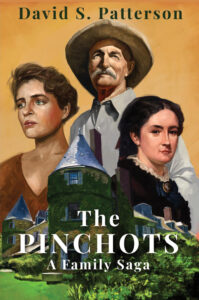 The Pinchots
A Family Saga
by David S. Patterson
Sunbury Press, 500 pp., paperback $29.95
Multigenerational histories are hard to pull off. The writer must balance the amount of attention given to the different generations (and members within each) and yet keep readers engaged throughout. David Patterson succeeds and then some while covering two centuries and three branches of Pinchot family (and American) history.
The Pinchot name may be familiar to Pennsylvanians because of the grand house in Milford called Grey Towers or because Gifford Pinchot served as governor in the 1920s and 1930s. Patterson starts with Gifford’s ancestors fleeing France for Milford in 1816, where they became successful merchants and land speculators. Gifford’s father, James, made his fortune in New York in the 1850s, rising to become a prominent citizen and patron of the arts before returning to Milford to transform the sleepy village and build Grey Towers, where much of the family’s fascinating history would unfold.
The central figure in the saga, though, is Gifford, the oldest child of James and his wealthy wife Mary. The favorite of their three children, Gifford fulfilled their hope of noblesse oblige, which their wealth in part made possible. His younger brother Amos struggled well into adulthood to establish his own identity and not be in his brother’s shadow.
And what a shadow Gifford cast. Their sister Antoinette married and moved to England to escape it. Gifford, the first American-born professional forester, was a leader in the American conservation movement and confidante and acolyte of Theodore Roosevelt. Of his many notable forestry achievements, introducing sustainable forest management to the United States by establishing the U.S. Forest Service and Yale’s forestry school rank highest. He twice overcame the Republican political machine to win Pennsylvania’s governorship and then pushed progressive agendas that benefitted the rural voters who helped elect him.
Amos eventually found his calling as a polemicist, vehemently opposing U.S. entry into both world wars and the New Deal before becoming undone by untreated bipolarism. One of Amos’ daughters became a famous actress, another became one of John Kennedy’s paramours. All three would meet with tragic deaths. Gifford’s descendants and one of Amos’ have fared better and continue working in conservation.
James G. Lewis
Forest History Society, Durham, NC