
Painter’s Folly
Written by Jennifer Thornton in the A Place in Time category and the Fall 2024 issue Topics in this article: Andrew Wyeth, Brandywine School (painting), Chadds Ford, Howard Pyle, N. C. Wyeth, National Register of Historic Places, Painter’s Folly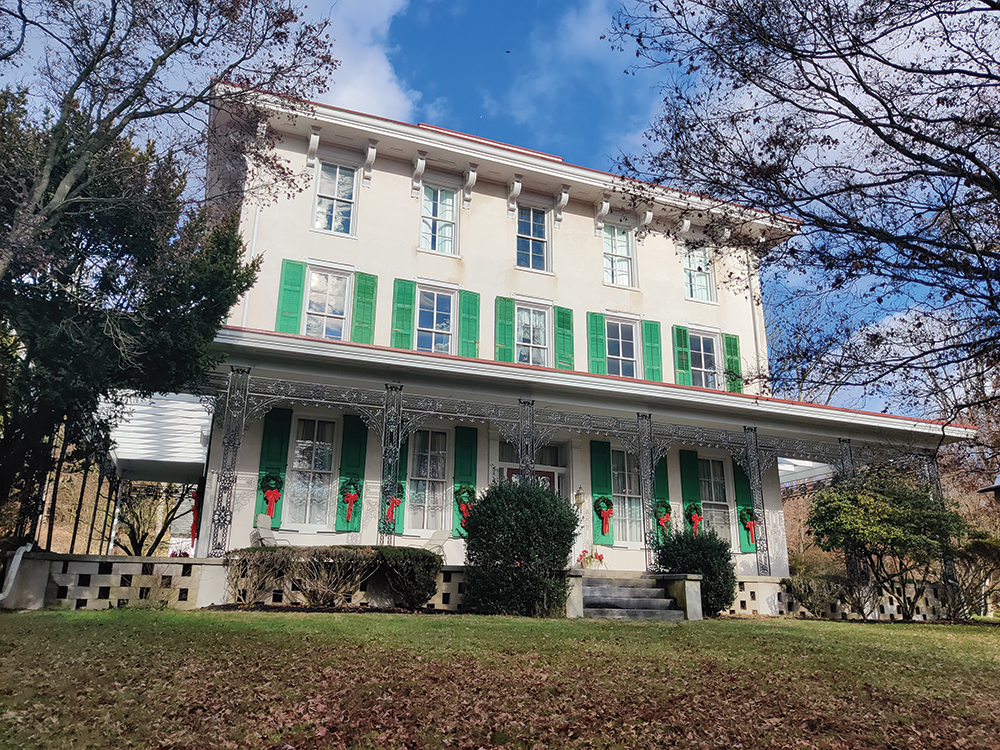
Located in the heart of the Brandywine Valley, Painter’s Folly — along with the surrounding historic sites and landscapes — has inspired generations of artists. Today, thanks to an effort led by Chadds Ford Township, the building has been listed in the National Register of Historic Places.
The building’s unique name is not related to its association with the famous Brandywine School of artists but rather is a reference to its original owner, Samuel Painter. A successful farmer, Painter commissioned the building in 1856 after traveling in Europe.
According to local lore, neighbors considered the ornate Italianate building to be an architectural extravagance and began calling it “Painter’s Folly.” Painter accepted the teasing in good humor, and over the years the moniker stuck.
In the late 19th century, Painter’s nephew, Howard Pyle (1853–1911), rented Painter’s Folly as a summer residence. Known as the “Father of American Illustration,” Pyle was a prolific artist, famous for his widely published illustrations of Robin Hood, swashbuckling pirates, and images of the American Revolutionary War. Over the course of his career, he illustrated nearly 200 books, and thousands of his paintings were published in periodicals like Harper’s Magazine.
Pyle’s most lasting legacy, however, was teaching. He encouraged his students to “project” themselves into their work, saying, “Throw your heart into the picture and then jump in after it.” Handpicked students spent summers with Pyle in Chadds Ford, painting 8 hours a day in a historic grist mill that Pyle had converted into studio space. In the evenings, they retired to the broad porch at Painter’s Folly for conversation and entertainment.
These summers had a profound impact on one of Pyle’s most successful students, N.C. Wyeth (1882–1945). After earning a large commission to illustrate the classic adventure novel Treasure Island, Wyeth purchased 18 acres and moved his family to Chadds Ford. His career soon rivaled that of his mentor, and Wyeth earned a reputation as one of the foremost illustrators of the 20th century. By the 1930s his teenage son, Andrew Wyeth (1917–2009), was joining him in his studio.
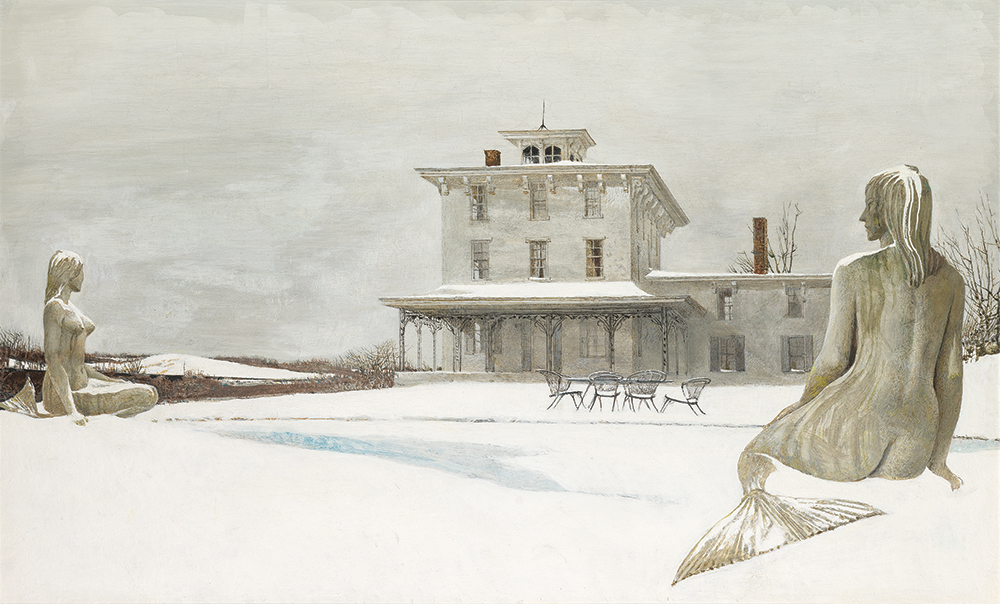
Painter’s Folly served as the subject for several paintings by Andrew Wyeth, including this one titled Painter’s Folly (1989, tempera, 13¾ x 22½ in.).
©2024 Wyeth Foundation for American Art / Artists Rights Society (ARS)
Andrew Wyeth would become one of America’s most famous artists, known for painting realistic scenes of rural life with rich detail and emotional impact. There is no doubt that Wyeth was deeply rooted in the Brandywine region, which provided an endless source of inspiration for his art. His first published work, at the age of 16, was an illustration of the same grist mill Pyle had turned into a studio three decades earlier.
Wyeth Foundation curator and director William Coleman explained that key buildings in Chadds Ford — the grist mill, a local farmstead, and Painter’s Folly — “spoke” to Wyeth, who kept “coming back and back to these same old buildings, always finding something new in them, these layers of emotion, association and abstraction.” In the late 20th century, Wyeth visited Painter’s Folly frequently to paint the building, drawn especially to its beautiful natural light.
Immortalized in Wyeth paintings such as Painter’s Folly (1989) and Widow’s Walk Study (1990), Painter’s Folly stands today as a monument, not of excess or folly,” but of an enduring tradition of American art.
Recent listings in the National Register of Historic Placea include Hosanna Church and Cemetery, Upper Oxford Township, Chester County; Mt. Alvernia Historic District, Shaler, Allegheny County; and Windsor Manufacturing Co., Philadelphia.
Jennifer Thornton is a historic preservation specialist in the Pennsylvania State Historic Preservation Office.