
Looking Back at 2023
Written by Amy Fox in the Trailheads category and the Winter 2024 issue Topics in this article: Art of the State, Cornwall Iron Furnace, Eckley Miners' Village, Ephrata Cloister, Erie Maritime Museum, Hope Lodge, Pennsylvania Military Museum, Pennsylvania Trails of History, State Museum of Pennsylvania, Women’s Armed Services Integration ActAs we do every year in these pages (for the last dozen years or so, anyway), it’s time to take a look at highlights of the year that was.
Art of the State 2023
The State Museum of Pennsylvania’s annual juried art exhibition, Art of the State, opened on September 10. This year 559 artists submitted 1,915 entries. Selection jurors Deborah Pinter (Cleveland Institute of Art), Kyle Hackett (James Madison University School of Art, Design and Art History) and Jennifer Zwilling (The Clay Studio) narrowed the field to 86 works by 86 artists from 29 Pennsylvania counties. At the opening reception, State Museum director Angelica Docog announced first, second and third place winners in each of five categories, as chosen by awards juror Jeremiah William McCarthy (The Westmoreland Museum of American Art). The State Museum Art Docents’ Choice Award and the William D. Davis Memorial Award for Drawing were also presented.
On a recent staff tour, State Museum fine arts curator Amy Hammond pointed out some new elements that accompany the exhibit. A community art project invites visitors to write or draw their favorite things about Pennsylvania on paper leaves in The State Museum’s hands-on center. Staff place the leaves on tree silhouettes that line a long wall outside the Art of the State exhibition space. Staff also created a social media wall where visitors can take selfies to share with friends and followers using the hashtag #SeePAArt. The exhibit will remain on view through January 7, 2024.
Grants and Accolades
In March, the American Alliance of Museums (AAM) announced that Ephrata Cloister in Lancaster County had again achieved accreditation, the AAM’s highest national recognition for museums. Ephrata Cloister is one of only 35 accredited museums in Pennsylvania. Developed over a period of 50 years, the AAM’s accreditation program is the museum profession’s primary vehicle for quality assurance, self-regulation, and public accountability. It promotes practices that enable leaders to make informed decisions, allocate resources wisely, and remain financially and ethically accountable while providing the best possible service to the public.
According to AAM’s recent statistics, out of the nation’s estimated 33,000 museums, only about 3.5 percent are currently accredited. Ephrata Cloister first earned accreditation in 1983. Accredited museums must undergo a subsequent review roughly every 10 years, so 2023 was Ephrata’s fourth review. Only 202 museums in the United States have been awarded accreditation four times. Congratulations to the staff and volunteers at Ephrata Cloister on this remarkable milestone.
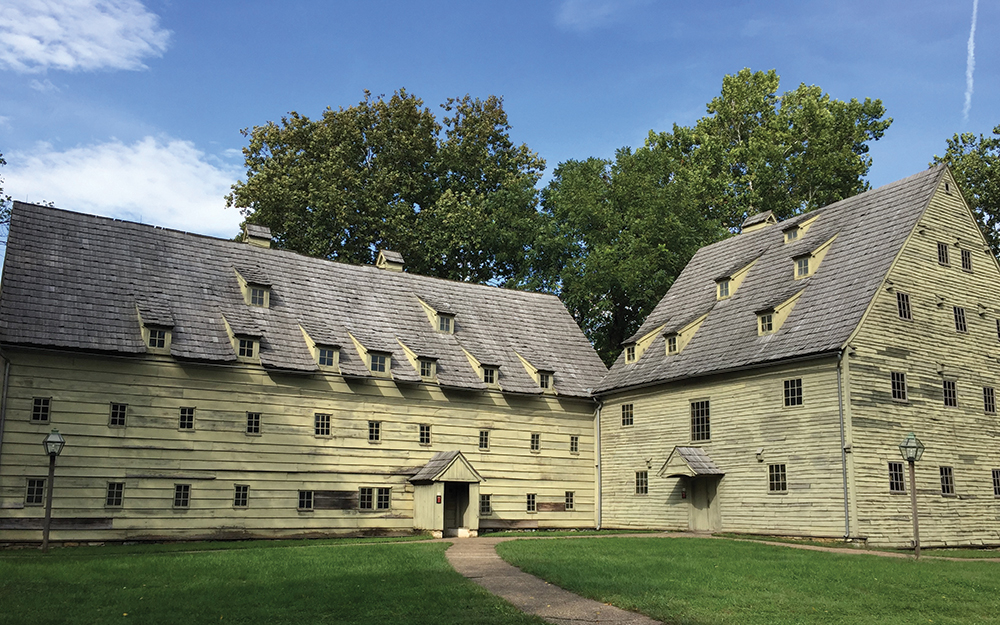
Ephrata Cloister was reaccredited by the American Alliance of Museums and received grants from the National Park Service for preservation work.
Photo, Ephrata Cloister
With the glow of reaccreditation still shining, PHMC learned in July that the National Park Service had awarded $488,816 for preservation work at Ephrata Cloister, one of 20 grants in 14 states during the second round of funding for the Semiquincentennial Grant Program approved by Congress in 2020. The awards program was established as part of the commemoration of the 250th anniversary of the founding of the United States. Established in 1732 by German immigrants fleeing religious persecution in Europe, Ephrata Cloister became known for its monastic architecture, art and music, printing, and a lifestyle of self-discipline. During the American Revolution, Ephrata’s buildings served as a hospital for nearly 260 Continental Army soldiers wounded or suffering from disease. Some of those soldiers rest in Mount Zion cemetery on a rise above the main collection of buildings at the historic site.
Using the grant funds, PHMC will repair and preserve the exterior components and finishes of six of the site’s 18th-century buildings, including hand-hewn wood siding and side-lap shingle roofs. The National Historic Landmark documentation for the property will also be updated.
At Eckley Miners’ Village in Luzerne County, a grant from the National Endowment for the Humanities (NEH) to PHMC will support the creation of an interdisciplinary research and learning center, repurposing the home of Asa Foster, a cofounder of the company town at Eckley. Announced in May, the grant was awarded under NEH’s Infrastructure and Capacity Building Challenge Program and will require PHMC to match the $48,400 federal grant with an equal amount of nonfederal dollars. The program is designed to stimulate local support for humanities projects. PHMC is one of only 24 organizations nationwide to receive grants through this program.
As we noted in the Fall 2023 issue of Pennsylvania Heritage, the learning center project will encourage collaboration among Eckley’s academic partners and residents of the Coal Region and will provide research experience for local K–12 students and workshops for area educators. This project is part of a larger strategic plan for Eckley Miners’ Village that explores development and preservation opportunities to create a sustainable and vibrant future for an anthracite patchtown with a rich history.
Anniversaries
For historians and other folks interested in history, every day is the anniversary of something. This year, sites on the Pennsylvania Trails of History commemorated numerous milestones. In addition to the 25th anniversary of the Erie Maritime Museum, which we covered in the Spring 2023 issue, here are a few highlights.
Cornwall Iron Furnace, on the Industrial Heritage Trail of History, is the only intact charcoal cold blast furnace in the Western Hemisphere. From the 1730s to 1973, iron ore mines operated near the furnace to supply the raw material needed. In June, staff, volunteers and community members marked the 50th anniversary of the closing of the Cornwall Mines (which flooded in 1972 during Tropical Storm Agnes) with public programs and a new book about the mines and furnace, Always More Production by geologist and historian Michael Weber.
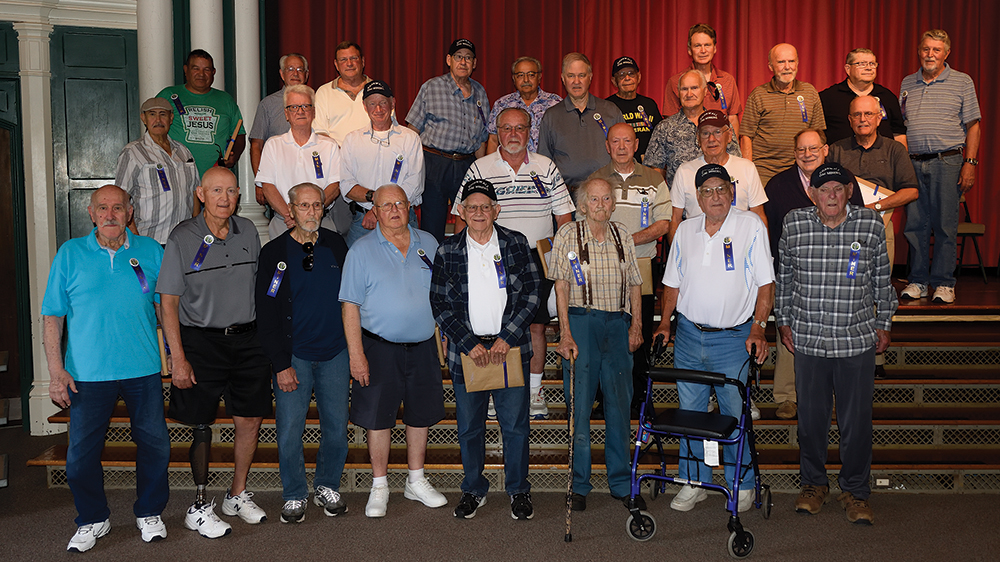
At the Cornwall Mines commemorative program on June 17, organizers recognized more than two dozen former miners who attended the event at Cornwall Elementary School.
Photo, Pennsylvania Historical & Museum Commission
In August the 75th anniversary of the Women’s Armed Services Integration Act, which granted women the right to serve as permanent, regular members of the Army, Navy, Marine Corps and Air Force, was celebrated at the Pennsylvania Military Museum in Boalsburg, Centre County. A public program focused on women’s military activities throughout U.S. history and a resource fair highlighted support available for women who are active-duty military members or veterans. The museum also marked the 125th anniversary of the Spanish-American War with an exhibit and a military encampment on the museum grounds.
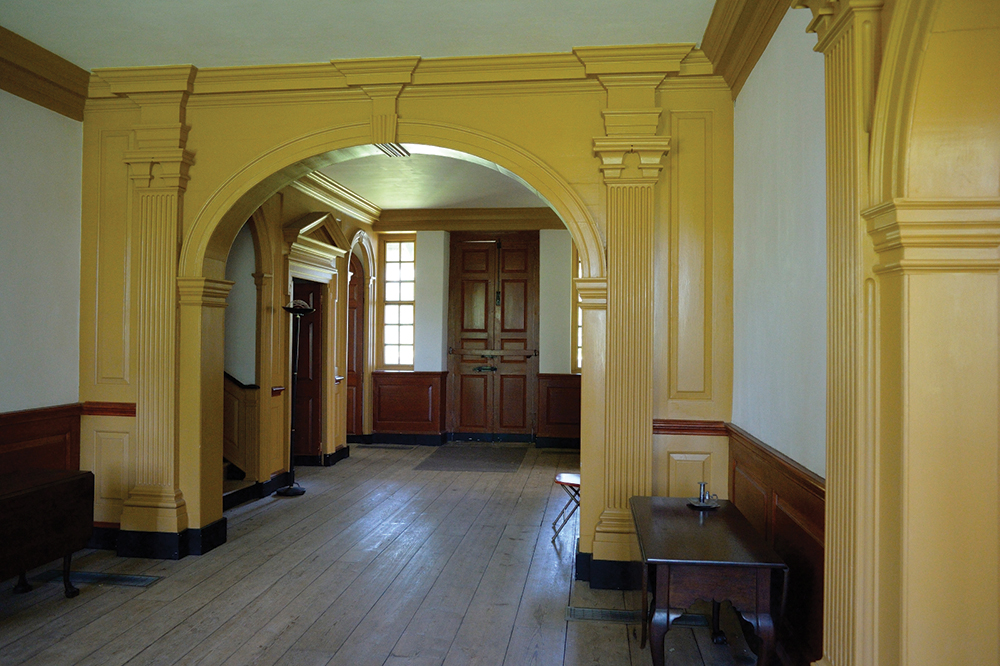
A classic example of Georgian architecture, Hope Lodge’s ground floor (built between 1743 and 1748) has a center hall with rooms symmetrically arranged on either side. This view is from the front door looking toward the rear of the house.
Photo, Pennsylvania Historical & Museum Commission
The Georgian mansion we now call Hope Lodge in Fort Washington, Montgomery County, was completed in 1748 by Samuel Morris, a prosperous Quaker farmer, ship owner, miller, ironmaster, and merchant. Programs and activities at the site this year drew attention to the home’s 275 years of history.
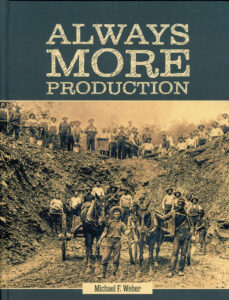 Sidebar: Always More Production
Recently published by the Friends of Cornwall Iron Furnace and authored by geologist and historian Michael Weber, Always More Production tells the story of iron ore mining in Cornwall, which began in 1737 and continued for 236 years until the last mine closed in 1973. The 260-page book is illustrated with 150 photographs and begins with the discovery of the mines and the foundation of the mining operation by Peter Grubb through its long period of ownership by Bethlehem Steel in the 20th century. The book can be purchased at Cornwall Iron Furnace, 94 Rexmont Road, Cornwall, PA, or by calling 717-272-9711.
Amy Killpatrick Fox is a museum educator in PHMC’s Bureau of Historic Sites & Museums. She writes a weekly blog also called Trailheads at patrailheads.blogspot.com.