
Heller–Wagner Grist Mill
Written by Arden Jordan in the A Place in Time category and the Summer 2026 issue Topics in this article: grist mills, Heller–Wagner Grist Mill, Hellertown (Northampton County), National Register of Historic Places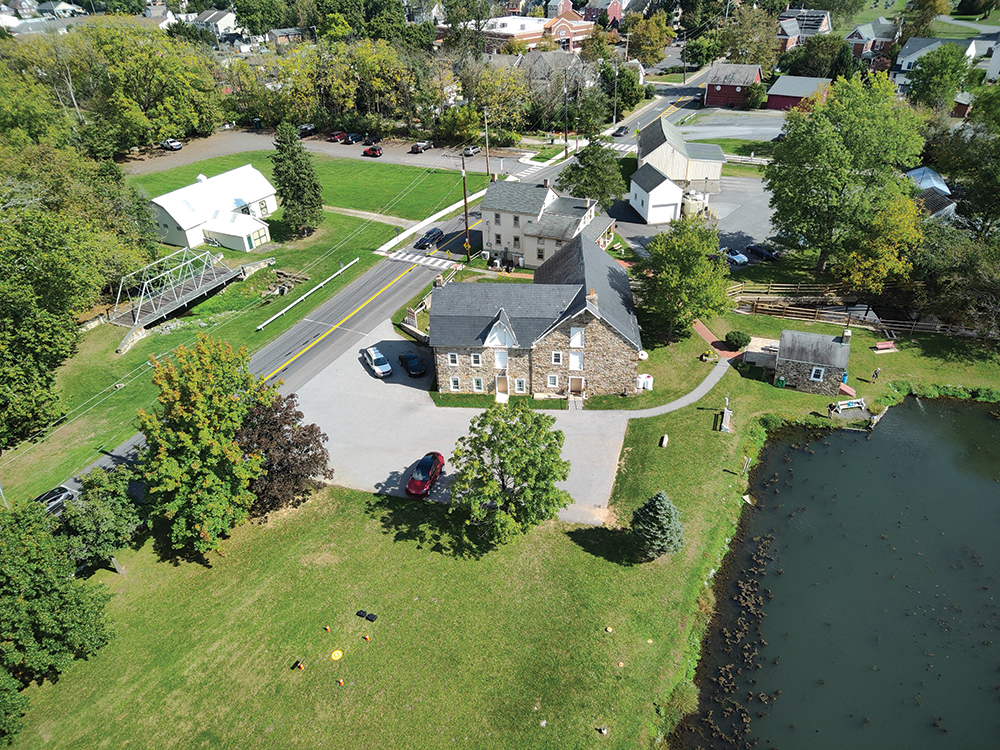
The Heller–Wagner Grist Mill property from above, with the mill at center, the wash house to the right, and the miller’s house, barn and shed in back.
Hellertown Historical Society
It’s a common misconception that all places in the National Register are of national significance; however, many sites and buildings have been listed for their local importance as well. The Heller–Wagner Grist Mill, listed in August 2025, is an example of one such place.
The mill was built around 1764 by Simon Heller, whose family named the town where the mill still stands today, Hellertown in Northampton County. Heller established the mill on one of the few widened dirt roads at the time, which connected Philadelphia to Bethlehem. During the Revolutionary War, the road served as a major thoroughfare for Continental Army troops. Although ownership changed hands over the years, the mill operated continuously until 1946.
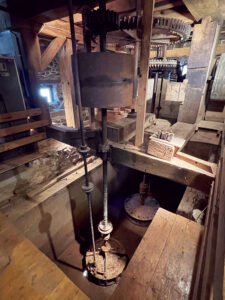
Close-up view of the the turbines with the tailrace visible at left.
Artefact Inc.
The Heller–Wagner Grist Mill complex includes a miller’s house, a wash house, a former carriage house, a storage shed and the original mill race. The mill, a vernacular fieldstone and heavy timber structure, changed over time with newer machinery as technology advanced. Originally operated by a water wheel, the mill was updated with two turbines in 1876. These turbines — as well as many other pieces of machinery — are still intact.
In grist mills, the miller used large millstones to grind grains into corn meal, flour or feed for livestock. Most towns during the 18th and 19th centuries had a grist mill where local farmers could take their grains. These large, solidly built masonry buildings lend themselves well to adaptive reuse. Across the state, mills have been turned into housing, restaurants and commercial spaces.
The Heller-Wagner Grist Mill, however, has been preserved as a historic site. It retains much of its integrity because of the Hellertown Historical Society, which has managed the property since 1984. The society undertook a large restoration effort in the late 1980s and has used the space for historic exhibitions, events and educational purposes.
The Heller–Wagner Grist Mill is not only a mill with great integrity but also an example of the power of volunteers in local preservation efforts. As we observe the Semiquincentennial this year, we not only commemorate our national heritage and historic places but also the local communities who work to share history and preserve those spaces.
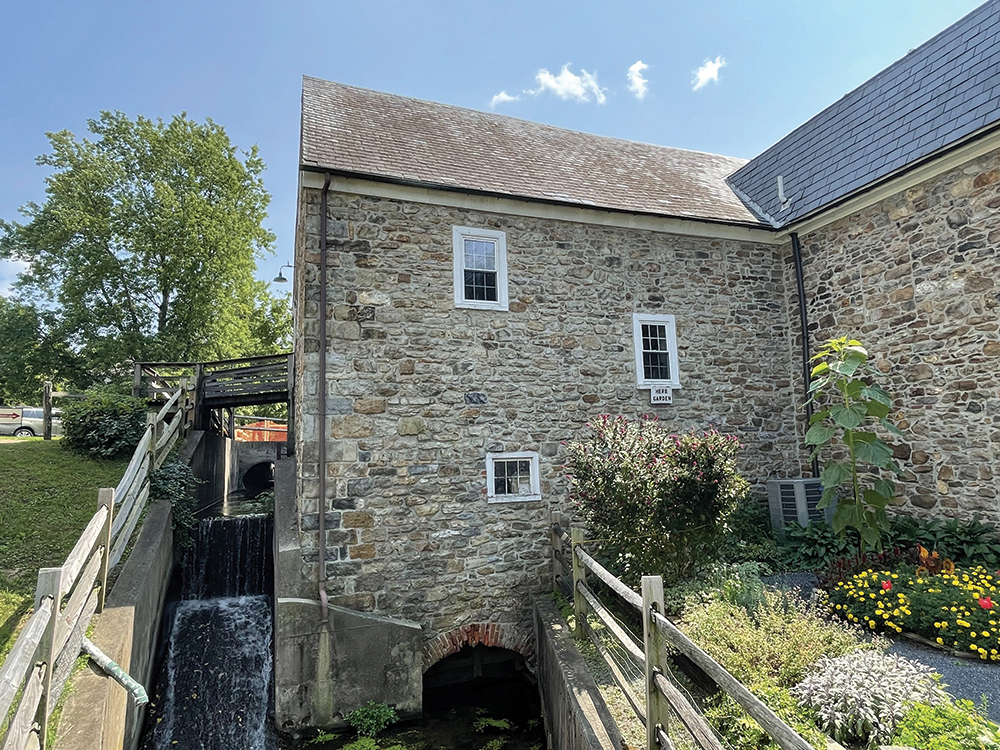
The north façade is the original section of the mill with the mill race waterfall and bridge. This area was heavily restored in the late 1980s.
Artefact Inc.
Recent listings in the National Register of Historic Places include Arlington Apartments, Pittsburgh, Allegheny County; Bobb Mill and Farmstead, Barto, Berks County; IBM Building, Pittsburgh, Allegheny County; Mercyhurst College, Erie, Erie County; Miller–Leedom–Dickinson House, Haverford Township, Delaware County; and Morse Elevator Works Historic District, Philadelphia.
Arden Jordan is a National Register reviewer for the Pennsylvania State Historic Preservation Office.