
Hanauer Rosenberg Residence
Written by Jennifer Thornton in the A Place in Time category and the Fall 2025 issue Topics in this article: Hanauer Rosenberg Residence, immigration and immigrants, Irene Kaufmann Settlement, National Council of Jewish Women, National Register of Historic Places, Pauline Hanauer Rosenberg, Pittsburgh, Progressive Era, Rodef Shalom Temple (Pittsburgh), World's Columbian Exposition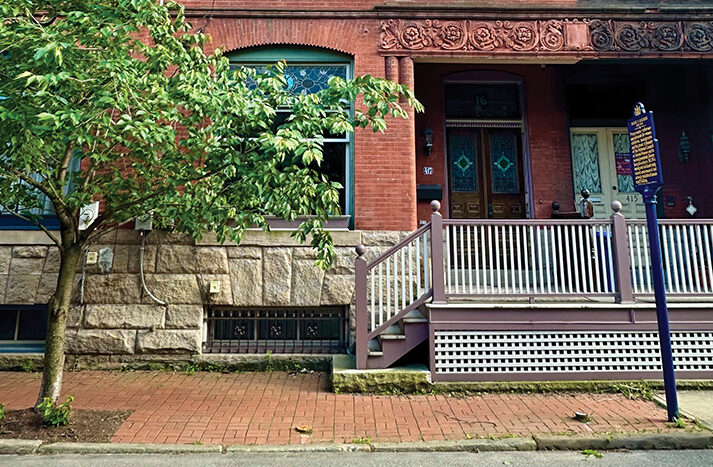
Nestled in Pittsburgh’s Deutschtown neighborhood, an unassuming rowhouse was once the home of Pauline Hanauer Rosenberg (1863–1940), a leader of Progressive Era reform movements and founding member of the National Council of Jewish Women (NCJW), the first nationwide Jewish women’s organization. Rosenberg was born into a German Jewish family in Allegheny City (now part of Pittsburgh). She and her family were members of the influential Rodef Shalom Temple, the home of Reform Judaism in Pittsburgh, and her parents were involved in a variety of Jewish social and service organizations, including the Concordia Club, B’nai B’rith, and the Hebrew Immigrant Aid Society.
Rosenberg’s mother, Henriette Hanauer, was especially supportive of her daughter, charting her own path beyond being a wife and homemaker and sending Pauline to attend college at a time when university education was uncommon for women. A family friend, Ruth Esmond, stated that Henriette “understood and sympathized with her ambitious daughter and encouraged her in ‘breaking the rules.’”
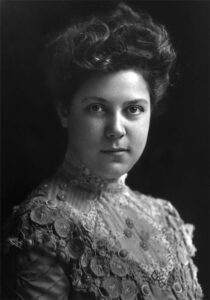
Pauline Hanauer Rosenberg
Wikimedia Commons
In 1886 Pauline married Hugo Rosenberg. Two years later the young couple moved into the rowhouse at 16 Liberty Street (now 417 Lockhart Street) in Allegheny City.
Dedicated to improving the lives of women and children, Pauline Rosenberg launched herself wholeheartedly into social work and soon made a name for herself in Pittsburgh. One writer for The Jewish Criterion wrote, “No city can boast a more representative type of club woman than Mrs. Hugo Rosenberg, and I use the term ‘club woman’ in its broadest sense.”
Rosenberg is best known for her work with the NCJW. The council originated when she and a group of Jewish women were asked to participate in the 1893 World’s Fair in Chicago, and they quickly realized that they would be expected to act as hostesses and serve refreshments rather than making substantive contributions at the event. Refusing to accept this limited role, the women walked out and founded their own organization.
The NCJW would adopt a broad agenda of social reform, initially focusing on providing aid to Jewish immigrants. By the early 20th century, the group advocated for low-income housing, public health initiatives, food and drug regulations, child labor laws, civil rights, birth control, and women’s suffrage.
In 1894 Rosenberg founded the Pittsburgh section of the NCJW, serving as its first president. In this capacity she established the Irene Kaufmann Settlement, which provided aid to residents of Pittsburgh’s Lower Hill District and offered educational programs for immigrants. Her impact was felt well beyond Pittsburgh’s city limits. Rosenberg started NCJW sections in communities across the commonwealth, from Philadelphia to Bradford, and was dubbed the “Pennsylvania State President” for these efforts.
In 1904 Rosenberg moved from her home in Pittsburgh, first to Philadelphia and later to New York, but her activism continued. In 1905 she was elected to serve as the second president of the NCJW. Under her leadership, the organization expanded its social welfare work, maintaining a permanent aid station at Ellis Island and working to prevent the human trafficking of recent immigrants.
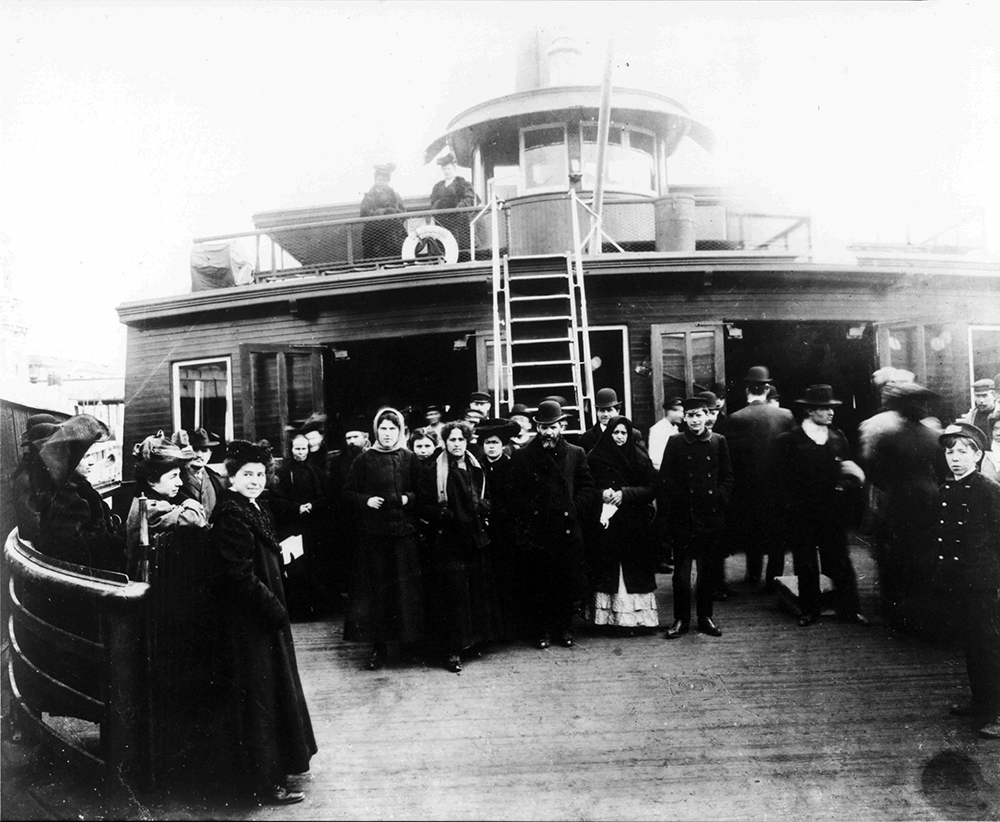
National Council of Jewish Women members meet newly arrived immigrants in New York, circa 1904.
National Council of Jewish Women New York
Through it all, Rosenberg remained hopeful about the future and steadfast in her belief that Jewish immigrants could find prosperity in the United States. She once said, “America, settled by all sects of people fleeing from religious intolerance and in search of a place where religious liberty and freedom of conscience might be enjoyed, could not long harbor bitter antagonism on the ground of religion. . . . From within her boundaries emanated the grant idea of freedom, such that the world had never heard of before.”
After a lifetime of service, Pauline Hanauer Rosenberg passed away in New York in 1940. Today, her Pittsburgh home is listed in the National Register of Historic Places and recognized with a Pennsylvania Historical Marker in honor of her legacy.
Recent listings in the National Register of Historic Places include Belmar School, Pittsburgh, Allegheny County; First Cambria AME Zion Church, Johnstown, Cambria County; Gallagher-Kieffer House, Pittsburgh, Allegheny County; Grandview Cemetery, Johnstown, Cambria County; Hahnemann Medical College & Hospital Complex Historic District, Philadelphia; Interstate Storage Warehouse, Philadelphia; Kutztown Silk Mill, Kutztown, Berks County; Loutellus Apartment Hotel, Pittsburgh, Allegheny County; Mount Saint Mary Convent and Saint Benedict Academy Historic District, Pittsburgh, Allegheny County; St. Colman School, Turtle Creek, Allegheny County; St. Luke’s Episcopal Church & Throop Memorial Parish House, Scranton, Lackawanna County; and Sixth Ward School, Sunbury, Northumberland County.
Jennnifer Thornton is the National Register coordinator for the Pennsylvania State Historic Preservation Office.