
Clayton-Frick Art Museum
Written by Jennifer Thornton in the A Place in Time category and the Spring 2026 issue Topics in this article: art, Clayton, Clayton–Frick Art Museum Historic District, Frederick J. Osterling, Frick Art Museum, Helen Clay Frick, Henry Clay Frick, National Register of Historic Places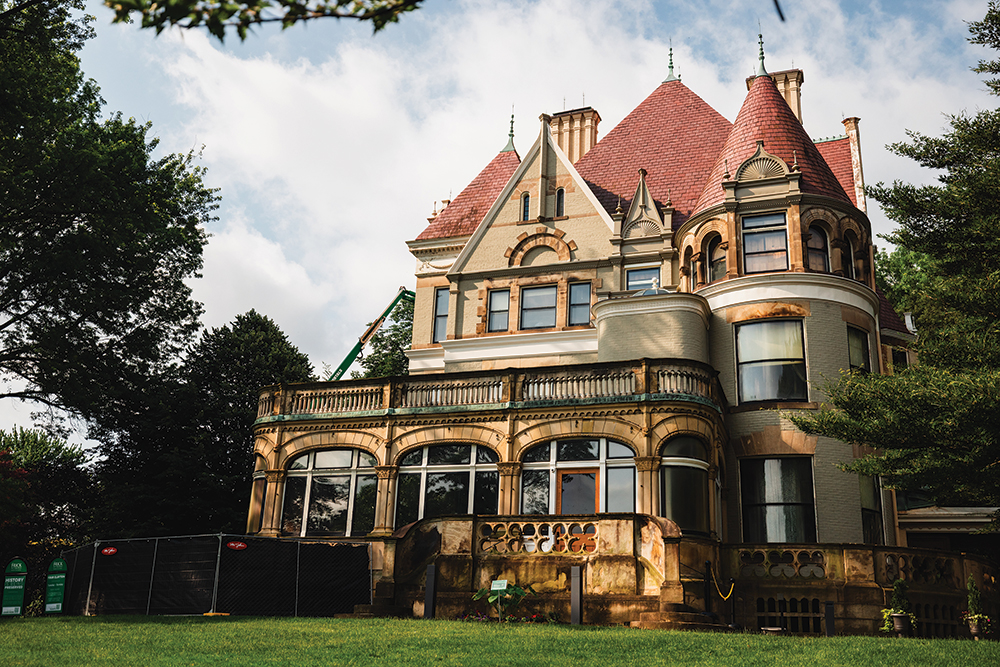
Clayton, the Frick Mansion, was listed in the National Register of Historic Places as part of the Clayton–Frick Art Museum Historic District, on May 23, 2025.
Photo, Seth Culp-Ressler, The Frick Pittsburgh
In 1882, Henry Clay Frick (1849–1919), the wealthy industrialist famed for his patronage of the arts and violent opposition to organized labor, purchased an Italianate-style house on Pittsburgh’s “Millionaire’s Row.” He christened the property “Clayton” and hired prominent Pittsburgh architect Frederick J. Osterling (1865–1934) to expand the building, converting it into a grand French Châteauesque–style mansion. It was not Henry Clay Frick, however, but rather his daughter, Helen Clay Frick (1888–1984), who had the most profound impact on Clayton. Though often overshadowed by her father, Helen had the vision and strength of will that transformed Clayton into the premier historical site and art museum it is today.
Helen Clay Frick was born into a life of immense fortune at the height of the Gilded Age. Even as a young child, she was surrounded by works of fine art. Her father, an avid art collector, purchased at least one painting per month during most of her childhood, and the works of Old Masters adorned the walls of the family home. As an adult, Helen developed into a significant art collector and scholar in her own right. She amassed a large collection and pursued education in art history, becoming a leading scholar of the French sculptor Jean-Antoine Houdon.
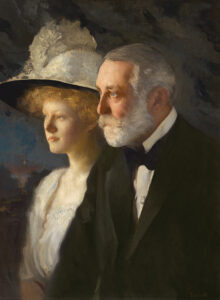
Henry Clay Frick and daughter Helen Clay Frick sat for this circa 1910 oil-on-canvas portrait by Impressionist painter Edmund Charles Tarbell (1862–1938).
National Portrait Gallery, Smithsonian Institution
After her father’s death in 1919, Helen became the wealthiest woman in the United States, and she used her affluence to champion the arts. In accordance with Henry Clay Frick’s will, his New York City mansion was transformed into a museum, opening his massive art collection to the public. Helen was a trustee of the Frick Collection and founder of the Frick Art Research Library, an internationally respected research center.
Helen also worked with the University of Pittsburgh to establish an art history department. Her support of the university continued into the 1960s, when she financed the construction of the Henry Clay Frick Fine Arts Building on the campus.
Helen Clay Frick possessed a forceful personality and strong opinions about art and her father’s legacy. At the Frick Collection in New York, she clashed with other trustees. Helen wanted the collection to reflect her father’s tastes and, as a result, opposed bequests from outside of the Frick family. When the trustees accepted an art donation from the Rockefeller family, she resigned. At the University of Pittsburgh, tensions over Helen’s efforts to control faculty appointments and restrict the teaching and display of modern art led to her withdrawal of financial support, putting an end to plans to display her personal collection at the university.
Helen’s efforts to preserve Clayton also stalled. She had entered into an agreement to transfer her childhood home to the National Trust for Historic Preservation after her death. This agreement fell apart in 1967, after the National Trust bestowed an award on historian Sylvester K. Stevens. Helen believed that Stevens’ recently published book, Pennsylvania: Birthplace of a Nation, maligned her father. She filed a suit against the author and promptly ended her relationship with the National Trust.
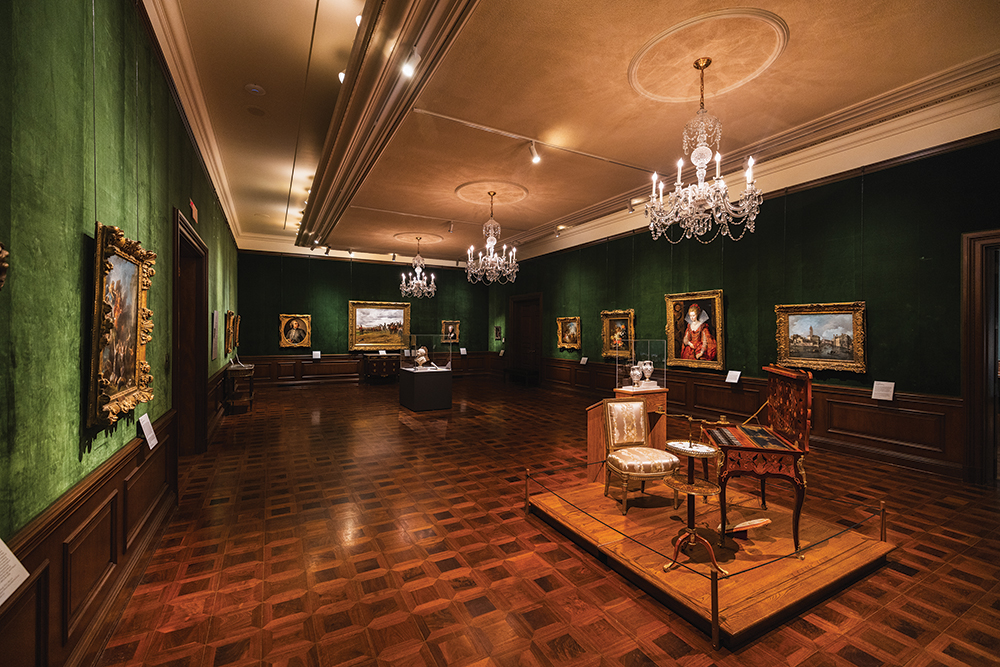
Helen Clay Frick opened the Frick Art Museum in 1970 to exhibit her collection of fine and decorative arts.
Photo, Seth Culp-Ressler, The Frick Pittsburgh
Helen instead charted her own path, forming the Helen Clay Frick Foundation, dedicated to the preservation of Clayton and her vision for the Frick family legacy. She also built an art museum adjacent to Clayton. The Frick Art Museum in Pittsburgh was carefully designed to aesthetically compliment Helen’s art collection. As with Clayton, Helen stipulated that her foundation was to be the sole owner and caretaker of the museum and its collection in perpetuity.
In 1981, Helen Clay Frick came home, moving back to Clayton full time. She died there in 1984. Today, the Frick Pittsburgh Museums & Gardens represents the culmination of her life’s work and indominable nature. It was listed in the National Register of Historic Places in 2025.
Jennifer Thornton is the National Register coordinator for the Pennsylvania State Historic Preservation Office.