
Vigilance: The Life of William Still by Andrew K. Diemer
Written by Richard Bell in the Book Review category and the Fall 2023 issue Topics in this article: African Americans, Andrew K. Diemer, Philadelphia, slavery, Underground Railroad, William Still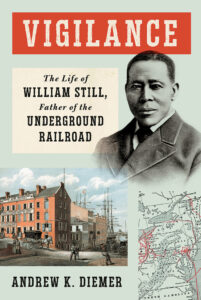 Vigilance
The Life of William Still, Father of the Underground Railroad
by Andrew K. Diemer
Alfred A. Knopf, 432 pp., hardcover $30
William Still, the Underground Railroad’s most indefatigable agent, was born in New Jersey to formerly enslaved parents in 1821. He moved to Philadelphia in search of work when he was about 23, having already imbibed from his family a keen sense of responsibility to aid fugitives from slavery whenever he could. In the city, he took on one menial job after another before securing a position as a clerk, on a salary of $3.75 per week, at the office of the Pennsylvania Anti-Slavery Society (PASS).
Still’s early tasks were to clean that office and answer the mail. But he soon enlarged his authority, partnering with PASS leaders to protect Black Philadelphians from kidnappers and to provide help and comfort to freedom seekers passing through the city on their way northwards. Thanks to Still’s efforts, the PASS’s Vigilance Committee would directly assist hundreds of former captives, including William and Ellen Craft and Henry “Box” Brown. Still would welcome 95 percent of them into his own home, and his wife Letitia worked selflessly to find them beds, mend their clothes, and wash, nurse and feed them during their time under her roof.
When sectional tensions finally ignited into Civil War, William Still expanded his work. He continued to offer direct aid to survivors of slavery, but now also kickstarted a campaign to desegregate Philadelphia’s streetcars and joined the movement to demand Black suffrage. It was in that context that Still published his magnum opus, The Underground Railroad (1872), an 800-page compendium of life histories he had taken down in interviews with many of the freedom seekers who had passed through his home and office.
In Andrew Diemer’s dogged new biography, William Still emerges as an unsung hero of the antislavery movement, a “hardworking, compassionate, and meticulous” man whose ceaseless “efforts empowered ordinary Black people to find their own paths to freedom.” Indeed, Still seemed to have a knack for putting the spotlight on other people rather than himself. This makes him a frustrating subject for biography and Diemer is left to trail him around Philadelphia. He watches closely and observes keenly as his subject marches through history, but often struggles to divine what Still was thinking or feeling.
Richard Bell
University of Maryland