
The Sesquicentennial International Exposition
Written by Brett Reigh in the Picturing PA category and the Summer 2026 issue Topics in this article: Liberty Bell replica (Sesquicentennial), Pennsylvania State Archives, Philadelphia, photographs, Sesquicentennial International Exposition of 1926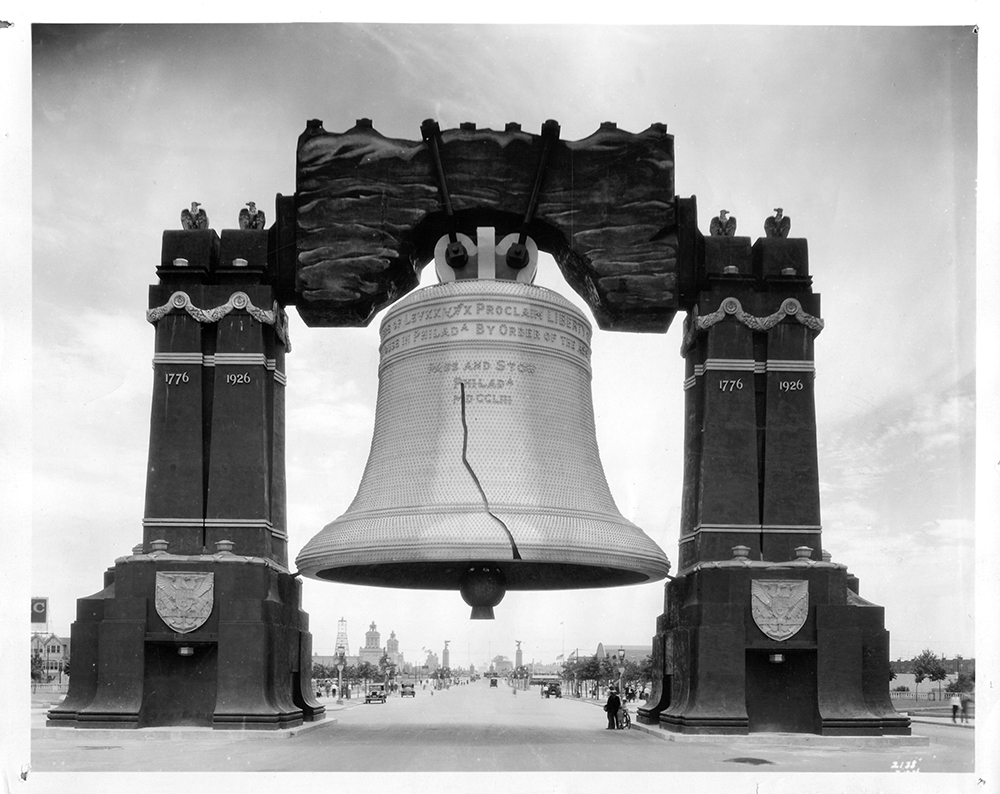
The seeds for the 1926 Sesquicentennial International Exposition were sown by the success of Philadelphia’s 1876 Centennial Exhibition. Philadelphia department store magnate John Wanamaker, the lone survivor of the 1876 Centennial’s Finance Committee, provided the initial push for another exposition to commemorate the signing of the Declaration of Independence. Unfortunately, he passed away in December 1922 before intensive planning could begin.
Wanamaker’s presence was sorely missed in the coming years as political infighting at both the municipal and statewide levels almost derailed the project. Congress held funding for the celebration until February 1925, which made planning uncertain, causing delays and a scaling back on the fair’s attractions. Finally, Mayor William Freeland Kendrick and U.S. Congressman William Vare took the reins, situating the exposition in a section of far South Philadelphia that was essentially a swamp.
After numerous fits and starts, and with portions of the fair yet to be completed, America’s 150th birthday party opened on May 31, 1926. It was an auspicious opening day, as torrential rains buffeted the city. Only a handful of visitors arrived in the first hour and a scant 20,000 attended opening ceremonies in the newly built Sesquicentennial Stadium, which seated 100,000. Rain would continue throughout the event, as precipitation fell on 107 of the exposition’s 184 days.
A highlight of that first day was the 10 p.m. lighting of the massive Liberty Bell replica, pictured here. The 80-foot bell was one of the most recognizable features of the entire exposition, as it straddled Broad Street at Oregon Avenue, ostensibly serving as the gateway to the festivities. With 26,000 light bulbs, the structure could be seen from City Hall nearly 3 miles away. Built in 47 days at a cost of $100,000, it contained 80 tons of steel and rested on 30-foot wooden pilings.
There were numerous other highlights associated with the Sesquicentennial. The iconic Delaware River Bridge (now the Benjamin Franklin Bridge) was dedicated as part of the celebration. On September 23, 1926, Sesquicentennial Stadium (demolished 1992) hosted one of the exposition’s most famous events — the world heavyweight boxing title fight in which Gene Tunney defeated Jack Dempsey with more than 120,000 people in attendance.
Additionally, five large exhibition halls provided fairgoers with a wide variety of things to see, including pavilions from 31 states, four territories and nine foreign countries. Midway areas integrated into the overall layout of the fairgrounds were filled with concessions, games and various types of entertainment. Displays touted 150 years of American goods and industries and themed areas included the Forum of Founders, the High Street of 1776, and Treasure Island. High Street was a block-long homage to Philadelphia’s Market Street of the Revolutionary era, with reenactors dressed in period costumes, demonstrating what ironworking, printing and home life looked like in the late 18th century.
Overall, Philadelphia’s Sesquicentennial celebration was considered a failure. The political squabbles over its organization and location, along with a lack of early funding, made the event something less than it could have been if it were properly planned. Exhibit fabrication continued into July and along with the terrible weather, helped keep many folks away, as only 6.4 million of the expected 30 million-plus visitors materialized. In the wake of the exposition, Philadelphia was left with a multimillion-dollar debt that went unrectified until May 1929.
There was some civic upside to the fair. The event was responsible for developing the southern end of South Philadelphia. Franklin Delano Roosevelt Park, Marconi Plaza, the Packer Park neighborhood, and the South Philadelphia Sports Complex were all created on the exposition’s grounds.
Documents pertaining to the Sesquicentennial International Exposition can be found at the Pennsylvania State Archives in Record Group 25: Special Commissions and Manuscript Group 219: Philadelphia Commercial Museum Photograph Collection.
Brett Reigh is an archivist at the Pennsylvania State Archives.