
Souls of Iron by James L. Polczynski
Written by Bruce Bomberger in the Book Review category and the Spring 2023 issue Topics in this article: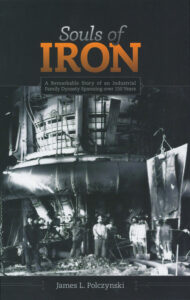 Souls of Iron
A Remarkable Story of an Industrial Family Dynasty Spanning Over 150 Years
by James L. Polczynski
Self-published, 267 pp., hardcover $34.95
Souls of Iron is the first book-length work to chronicle the lives of the Coleman family and their ironmaking enterprises in the Lebanon Valley of southeastern Pennsylvania. It is now the most thorough work available for anyone wishing to understand who they were, how they were likely motivated, and how significantly they affected their theater of activity.
In any town, city, county or larger polity, the lives of its “first citizens” are the most scrutinized. Robert Coleman (1748–1825), Ann Old (1755–1844) and their prolific descendants have been counted always among the valley’s first citizens. They built and greatly expanded the iron and steel industry that was centered in Lebanon County from the mid-18th century through the World War I era. From the iron furnace and forge plantations to the vertically and horizontally integrated mine-to-manufactory rolling mills with railroad and train stock, they not only lead the valley’s industrial expansion but also, socially, gave rise to many stories and impressions circulated about their great wealth, influence and enjoyments.
Much diminished but still numerous are the remains of the Coleman empire in the Lebanon Valley and northern Lancaster County, though many surviving buildings and features have become disassociated through the demolition of technologically industrial components and entire facilities with much intervening and unrelated new construction. The rich historical record — including photographs of lost buildings — along with the remaining structures have been a puzzle, too, like the family.
Souls of Iron employs chronological and topical chapters, many statistics, illustrations, Coleman genealogy, and a Cornwall Ore Banks ownership chart to present a broad, clear picture of the Coleman iron legacy and social relationships. Though not a scholarly work, it includes a secondary source list that also bolsters its reference value.
Bruce D. Bomberger
Lebanon County Historical Society