
Kaufmann’s by Marylynne Pitz and Laura Malt Schneiderman
Written by Louisa Iarocci in the Book Review category and the Spring 2023 issue Topics in this article: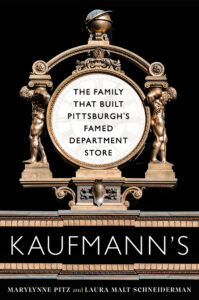 Kaufmann’s
The Family That Built Pittsburgh’s Famed Department Store
by Marylynne Pitz and Laura Malt Schneiderman
University of Pittsburgh Press, 263 pp., hardcover $26.95
The story of the department store as a retailing institution and a historical landmark in major cities in the United States in the 20th century continues to fascinate historians and the public alike. Pitz and Schneiderman bring a keen journalistic perspective to their account of the people and the places behind one of Pittsburgh’s most renowned department stores. In Kaufmann’s they adeptly weave business history with a biography of a family from their arrival as Jewish immigrants in western Pennsylvania in the 1870s to their ascension to millionaires in the Gilded Age.
The book devotes particular attention to the rise of the store in the first half of the 20th century, masterminded by Edgar J. Kaufmann and his wife and cousin Lillian (later changed to Liliane) Kaufmann. The flagship downtown store becomes a showpiece of successful retailing strategies, ranging from expanding product lines to offering the latest in consumer goods, from adding amenities and services for clients and staff to staging public exhibits and fashion shows.
The role of these merchant princes as art patrons, architectural clients and civic benefactors is also highlighted in the book’s mapping of the Kaufmann’s building campaign, from downtown commercial palaces to suburban mall outlets, from civic arenas to custom designed homes by leading architects of the time.
But the book really goes beyond the retelling of these corporate successes to provide an unflinching look at the personal lives of the Kaufmanns, revealing family scandals and tragedies. These are presented in stark contrast to the battles waged by their employees, often minorities, for labor rights and social equity. This epic tale of an American family unfolds against the backdrop of its time and place, making Kaufmann’s a compelling story of the city of Pittsburgh itself, which with its monuments and ruins still bears the imprint of these human lives.
Louisa Iarocci
University of Washington, Seattle