
Haul of Records—The Pennsylvania State Archives Moves to a New Building: An Interview with State Archivist David Carmicheal
Written by Kyle Weaver in the PHMC Highlights category and the Summer 2023 issue Topics in this article: Ancestry (ancestry.com), Capitol, COVID-19 pandemic, David Carmicheal, genealogy, Harrisburg, Pennsylvania Charter, Pennsylvania Historical and Museum Commission, Pennsylvania State Archives, September 11 attacks (9/11), State Records Center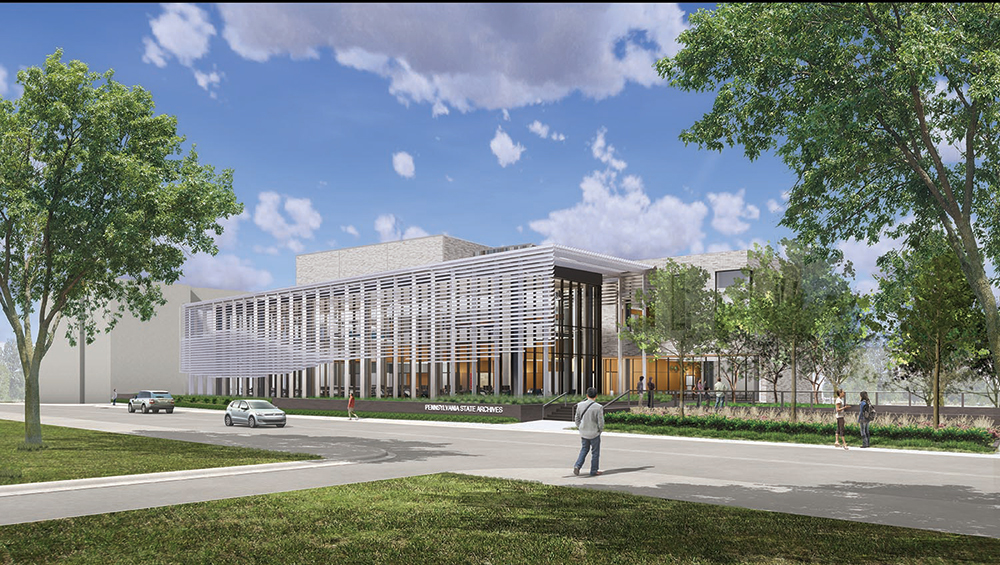
The new 146,000-square-foot Pennsylvania State Archives building as envisioned by the architectural design firm HGA.
Pennsylvania Historical & Museum Commission
Like its national counterpart, the Pennsylvania State Archives has a mission to acquire, preserve and provide access to public documents, focusing on the records of state government, as well as private papers relevant to history. To better fulfill this mission, the State Archives is moving into a new state-of-the-art facility at 1681 North Sixth Street in Harrisburg.
In 1903 the Division of Public Records, which later became the Pennsylvania State Archives, was created as part of the Pennsylvania State Library. In 1945 the State Archives was incorporated with the State Museum of Pennsylvania and the Pennsylvania Historical Commission into a larger agency, the Pennsylvania Historical & Museum Commission.
The State Archives’ collections and offices were located within various buildings near the Pennsylvania State Capitol in Harrisburg until late 1964, when a new complex of two connected buildings to house both the State Archives and the State Museum was completed. Now more than five decades later, a new building has been constructed to house the State Archives’ holdings, its staff offices, and its research areas.

State Archivist David Carmicheal, director of the Pennsylvania State Archives.
Photo, Pennsylvania Historical & Museum Commission
David Carmicheal, the current director of the State Archives, has more than 30 years of management and consulting experience in public and private archives, records management programs, and museums. He recently spoke with Pennsylvania Heritage about this new phase in the institution’s long history.
Can you tell readers what documents are held in the Pennsylvania State Archives and why it is important to preserve them?
The primary purpose of the Pennsylvania State Archives is to identify commonwealth records that may protect the long-term legal rights, health, safety and historical story of Pennsylvanians and those that help commonwealth officials make informed decisions. Then we preserve those records for hundreds of years and share them with people online and in person. We preserve historical records, like William Penn’s original Charter that established Pennsylvania; legal records, such as all the laws passed in the state since 1682; birth and death records; many military records; and about a million maps and photos. Most recently we’ve been preserving records of the COVID-19 pandemic, because in another hundred years, decision makers will want to know how their predecessors responded to this health crisis, just as today they are looking at the response to the influenza pandemic of 1918 to 1920.
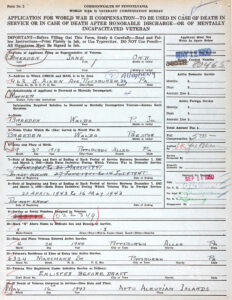
The State Archives provides proof of military service to hundreds of veterans each year.
Pennsylvania State Archives
What is the most popular type of record requested for use in the State Archives?
My favorite record request is one we get nearly every day: requests for military records to help veterans prove their service. Veterans are entitled to many benefits if they can prove their service, and several decades ago the federal government’s Military Personnel Records Center suffered a disastrous fire that destroyed the service records of many veterans. So, veterans turn to us to find other records that prove military service. It gives us a lot of satisfaction when we can help them.
Without question, though, the most requested records are those that relate to genealogy and family history. We hold records of Pennsylvania births and deaths, and those are especially popular. Currently, births from 1906 to 1917 and deaths from 1906 to 1972 are publicly available.
Quite a few years ago — even before I arrived — the Archives entered into a partnership with Ancestry.com to make many of our genealogical records available online, free of charge, to all Pennsylvania residents. [The link is on the State Archives website.] Ancestry does a great deal of scanning for us, and we calculate that we have saved the taxpayers over $2.5 million in scanning costs since the partnership began.

David Carmicheal reviews plans for the new State Archives building.
Photo, Pennsylvania Historical & Museum Commission
When were you appointed director of the State Archives and what does that position entail?
I was hired in 2014. The director oversees all the work of the State Archives and the State Records Center. The Archives cares for 250 million documents that are permanently valuable to the commonwealth and its residents, while the State Records Center protects another 750 million documents that agencies are required to keep for some period of time — ranging from a couple of years to almost 100 years — before destroying them. So, we care for a billion pieces of paper — which makes us very anxious to see state agencies move to digital records and away from paper. In addition to safeguarding those records, we make them available to people who are authorized to see them. The public can see most of the records in the State Archives; the records in the State Records Center are available only to the agencies that created them.
We also teach state agencies and local governments how to manage their records efficiently and how to protect them from loss — through natural disasters, for example. We digitize a large number of historical records and make them available online — currently over 21 million — and we are creating a Digital Archives and Digital Records Center to preserve digital records for hundreds of years, because even as state agencies stop producing paper, they are still producing many records that need to be preserved for a very long time. Preserving a piece of paper for 200 years is a lot easier than preserving a Microsoft Word document for that long.
Ultimately, our work is about people. We serve anywhere from 4 to 6 million users in a single year, though most never visit the Archives itself because they find so much online. As for my own work, I jokingly say that I got into archives because I love historical documents, and now I spend my days working on budgets and personnel questions. I don’t get to work with the records the way I did earlier in my career, but I get to — hopefully — inspire a terrific group of archivists and records managers who do that actual work. All the staff take their jobs very seriously because we all truly believe that what we do makes a difference in the lives of Pennsylvanians.
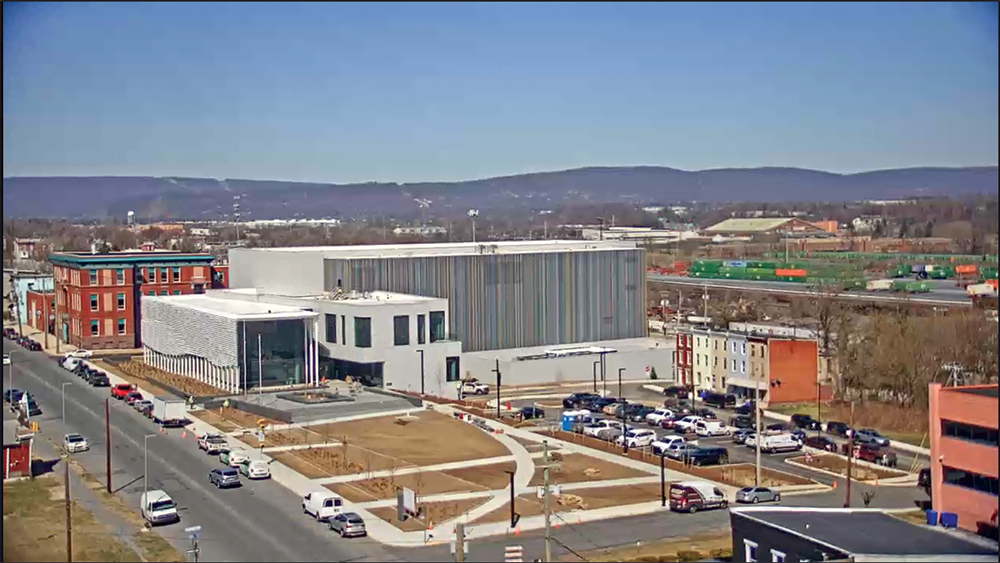
The State Archives in the final stages of construction on Harrisburg’s Sixth Street.
Photo, Pennsylvania State Archives
When was it decided that a new State Archives building was necessary and why?
That decision was made before I was hired, so I arrived knowing that it was the first order of business. The previous Archives building was built in the mid-1960s and is getting close to 60 years old. I always say that it was state of the art when the IBM Selectric typewriter was state of the art, so the building is not really flexible enough for the digital age. The building itself no longer maintains the tight temperature and humidity controls that are required to preserve paper, and the way we do preservation has changed over the last 60 years. We know a lot more now than we did then about how to build facilities that can preserve historical records, both paper and digital. In addition, our current building is out of space, so a feasibility study in 2013 determined that there really weren’t any options except to build a new facility.
The new facility is about a mile north of the old location adjacent to PHMC headquarters at The State Museum of Pennsylvania. How will this move impact the State Archives’ connection to PHMC?
PHMC is a statewide organization with operations spread across the commonwealth, so we’re all used to working together over long distances. Fortunately, in this case, that distance is only about a mile from our current location. I think the new building will expand PHMC’s reach to the public in many ways. For example, the new building will include an exhibit room, which we don’t have in our current building.
What is involved in a move to a new facility?
Moving the Archives is the equivalent of moving 78 three-bedroom houses simultaneously. It is no easy matter. I have done one other major archives move in my career, and several people asked me after that move whether we had lost anything. I always said, truthfully, “We didn’t lose anything, but we found a few things we didn’t know we had!” We’ve spent a few years now making sure everything is in containers that are strong enough to survive the move — all the boxes are barcoded so we can track them — and making sure that everything is properly labeled. Some of our documents are very large. Some maps are more than 10 feet long, for example, and many, like Penn’s Charter, are very fragile, so we need to plan the move very carefully.
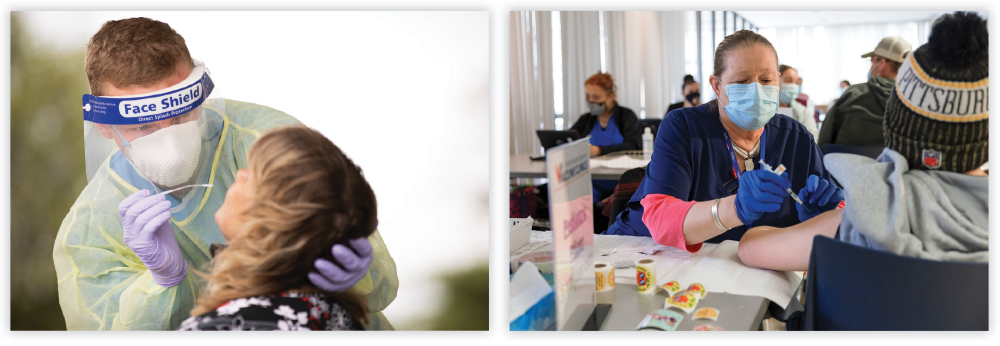
The Pennsylvania State Archives holds hundreds of thousands of photographs in its collections, documenting 150 years of Pennsylvania history, including images related to the recent COVID-19 pandemic in the state.
Pennsylvania State Archives, RG-20
What plans does the State Archives have for outreach to its new neighbors?
The new facility will have exhibit space, so we expect to offer special events from time to time, which we hope will give our neighbors the opportunity to visit and get to know the Archives. Although we are the archives for the entire commonwealth, we are putting some special attention on Harrisburg. For example, we have added the Harrisburg City Archives collection to our holdings, so our neighbors are going to find more information than ever before about their own community.
What special features does the new facility offer for patrons?
We’ve designed the new building to be more welcoming than our previous facility, with lots of sunlight — except in areas where records need special protection from the sun, of course. We will have comfortable seating, more self-service copiers and computers. We are adding an entire self-service section just inside the front door, where visitors who do not need to look at original documents can use the computers to browse records and can access books on local history, genealogy and historical topics. The building will give us space to increase our digitizing, so even people who don’t visit the building will benefit when they visit us online. We also hope to have space to do more work with students and teachers and to collaborate with community groups who want to identify and preserve their own history.
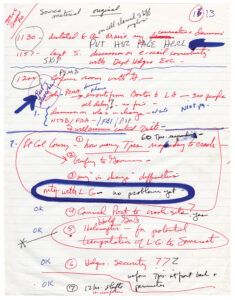
A page from State Police commissioner Paul Evanko’s field notes on the Flight 93 crash in 2001.
Pennsylvania State Archives, RG-30.83
With so many records now available online, why should researchers visit the facility in person?
We believe very strongly in online access to records. We already have over 20 million documents available online and hope to add many millions more in the next few years. But quite often there is no substitute for seeing an original historical document. We recently did an exhibit of documents created by the commissioner of the State Police on 9/11 in 2001, and even though we shared the documents online, it was only when you looked at the originals that you could see the tension of that day reflected in the handwriting, the pressure of the pen on the paper — all the things you can’t get in an image. Not every original embodies that level of interest, of course, but even simpler documents can be exciting to see in person. How much fun is it to hold a document that your great-great-grandfather created or signed? It’s hard to beat the immediacy of an original document.